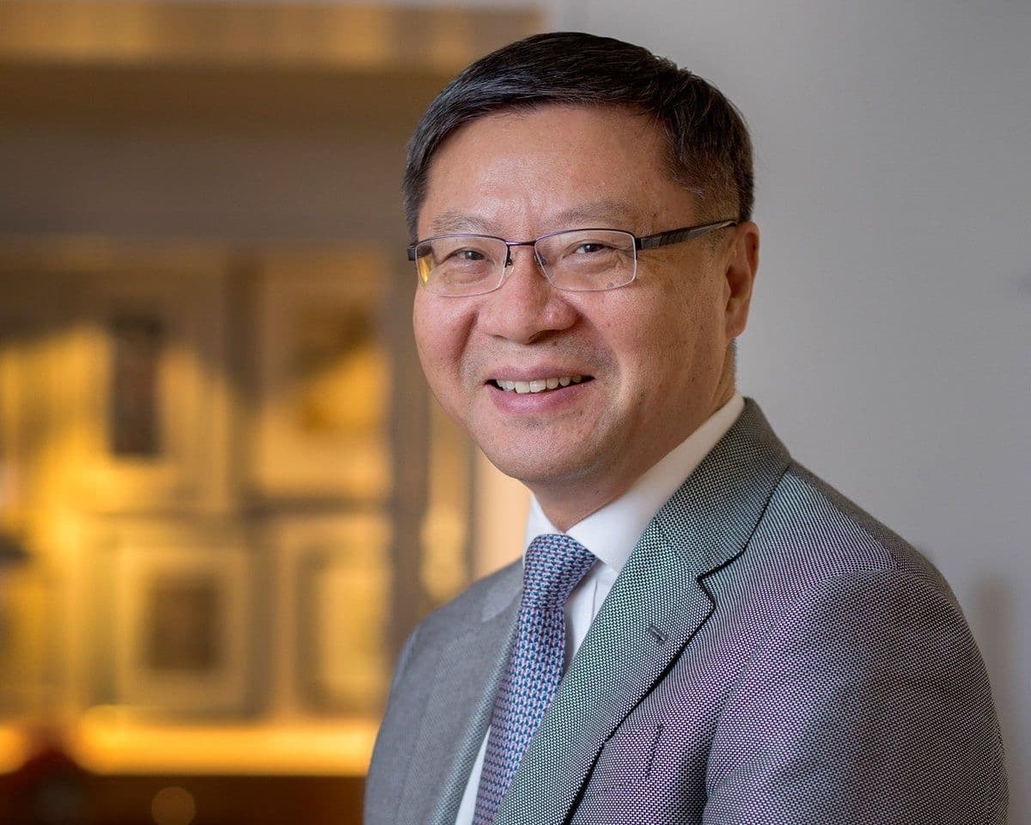
ZHANG Weiwei is a leading Chinese thinker, Dean of the China Institute, and Distinguished Professor of International Relations at Fudan University. He is a board member of China’s National Think Tanks Council, Chairman of the Chunqiu Institute, and Editor-in-Chief of the academic magazine Dongfang Journal. He also hosts China’s popular weekly public affairs program This is China, aired on Shanghai’s Dragon TV and across numerous social media platforms.
He received his Ph.D. in International Relations from the University of Geneva. A former visiting fellow at Oxford, he served for many years as Senior Research Fellow at the Centre for Asian Studies at the University of Geneva.
In the mid-1980s, he worked as a senior English interpreter for Deng Xiaoping and other Chinese leaders. He has traveled to more than 100 countries.
He is the author of the best-selling and award-winning China Trilogy, published by Shanghai People’s Press: Zhongguo Chudong (The China Ripple), Zhongguo Zhenhan (The China Wave: Rise of a Civilizational State), and Zhongguo Chaoyue (The China Horizon). The English editions of the latter two were published by World Century, New Jersey, in 2012 and 2016 respectively.
He is also widely known for his thesis of China as a civilizational state, developed in many of his writings, including the China Trilogy and Wenmingxing Guojia (Civilizational State, Shanghai People’s Press, 2017).
In a widely publicized 2011 debate with Francis Fukuyama, author of The End of History and the Last Man, he was among the first to predict that the Arab Spring would soon turn into the Arab Winter.
His other works include Ideology and Economic Reform under Deng Xiaoping (Kegan Paul, London, 1996), Transforming China: Economic Reform and Its Political Implications (Macmillan, London, and St. Martin’s, New York, 2000), and Heweiminzhu (What Is Democracy, Shanghai People’s Press, 2021).
He has written extensively in both Chinese and English on the civilizational state, China’s political and economic reforms, the China model of modernization, China’s foreign policy, and comparative politics.